A life in dates, 1883-1966
Vinayak Damodar Savarkar was born at Bhagur on 28 May 1883 and died in Bombay on 26 February 1966. The entries below follow his life year by year and end with how he has been remembered since.
Bhagur, Nashik and Pune, 1883-1906
- Bhagur, near Nashik, Bombay Presidency
Birth at Bhagur, 1883
Vinayak Damodar Savarkar was born on 28 May 1883 at Bhagur, near Nashik, in the Bombay Presidency of British India.
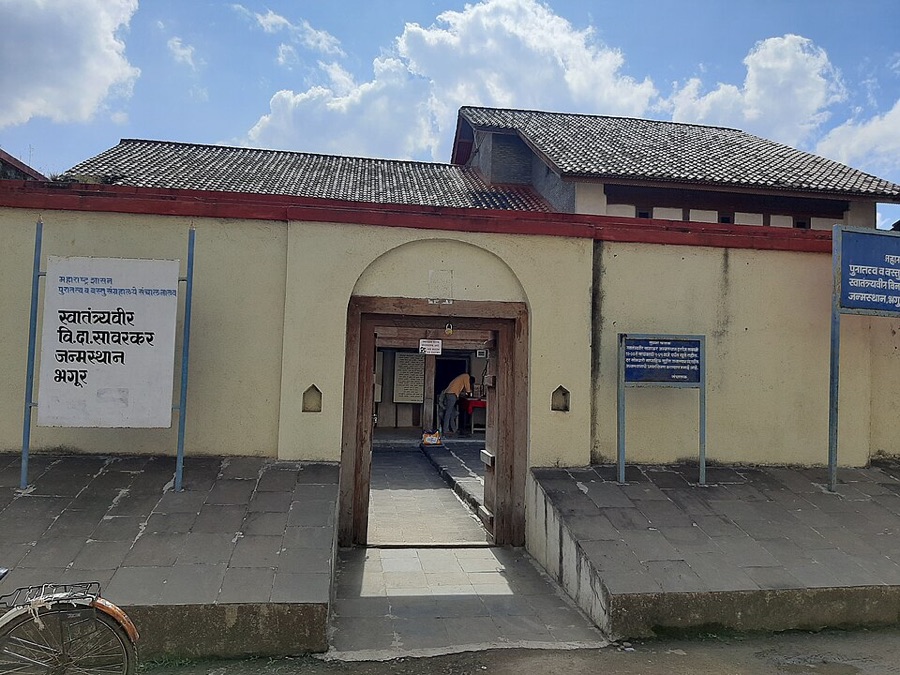
The Savarkar family house (wada) at Bhagur, photographed in 2021. Photo: Bharatjeevan. CC BY-SA 4.0, via Wikimedia Commons. Death of his mother
His mother Radhabai died when he was nine.
The oath
As a schoolboy he took an oath before the family deity to fight for India's freedom by armed revolt. The hanging of the Chapekar brothers that year is the event he later named as its cause.
Death of his father
His father Damodarpant died during the plague. The three brothers were brought up by the eldest, Ganesh (Babarao).
Mitra Mela founded
He founded the Mitra Mela, a secret society of young men in Nashik.
Marriage
He married Yamuna (Mai), daughter of Bhaurao Chiplunkar.
Fergusson College
He entered Fergusson College, Pune, after passing matriculation in December 1901.
Abhinav Bharat founded
The Mitra Mela became Abhinav Bharat, a revolutionary society with branches across western India. Open the document
Bonfire of foreign cloth
He organised a public bonfire of foreign cloth in Pune during the Swadeshi movement, and was fined and expelled from his college hostel for it.
B.A.
He passed the B.A. examination of the University of Bombay.

London, 1906-1910
- Nashik, Pune and London
Abhinav Bharat and India House, 1904-1910
In 1904 the Mitra Mela circle in Nashik became the secret society Abhinav Bharat. In 1906 Savarkar left for London, where India House became the centre of his revolutionary work until his arrest in 1910.
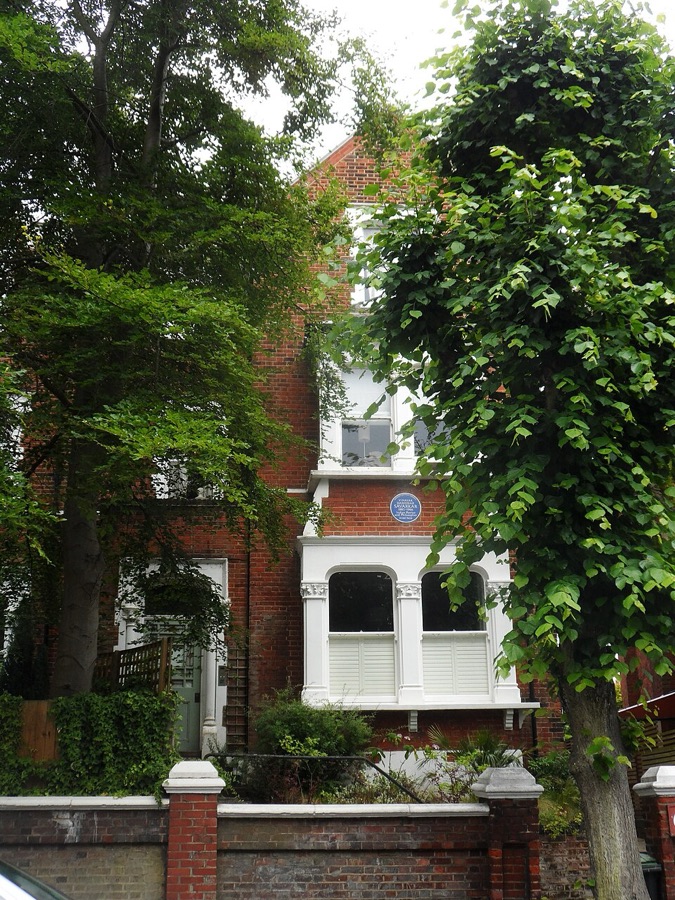
65 Cromwell Avenue, Highgate, London, the house that was India House. The blue plaque naming Savarkar was put up in 1985. Photographed in 2015. Photo: Spudgun67. CC BY-SA 4.0, via Wikimedia Commons. Fiftieth anniversary of 1857
He marked the fiftieth anniversary of the 1857 uprising at India House. The leaflet Oh Martyrs was written for the anniversary the following year. Open the document
Life of Mazzini
He finished a Marathi life of the Italian nationalist Joseph Mazzini. His brother Babarao published it in India.
- London; printed on the Continent
The Indian War of Independence, 1857 (published 1909)
Savarkar's history of the 1857 uprising, written in Marathi in London, was published in English translation in 1909 after the British authorities had tried to stop its circulation.
Called to the Bar, and refused
He passed the examinations at Gray's Inn. The Inn refused to call him to the Bar because of his political activities.
Babarao transported for life
His elder brother Ganesh (Babarao) was sentenced to transportation for life for publishing patriotic verses. The Bombay High Court gave judgment on 8 November 1909. Open the document
Madan Lal Dhingra shoots Curzon Wyllie
Madan Lal Dhingra, a member of the India House circle, shot dead Sir William Curzon Wyllie at the Imperial Institute in London. At the meeting called to condemn Dhingra, Savarkar stood up and opposed the resolution, and he had Dhingra's statement published. Dhingra was hanged at Pentonville on 17 August 1909.
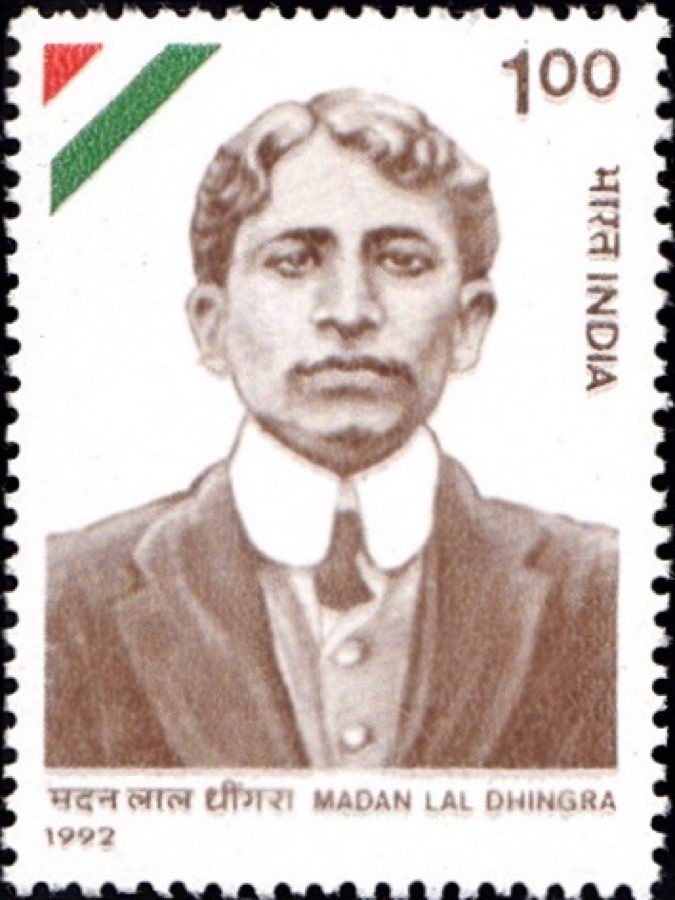
Madan Lal Dhingra on an Indian postage stamp of 1992. Photo: India Post, Government of India. GODL-India, via Wikimedia Commons. Gandhi and Savarkar share a platform
Gandhi presided over a Vijayadashami dinner at which Savarkar was the main speaker. It is the first recorded meeting of the two men.
The killing of Jackson at Nashik
Anant Kanhere, a member of Abhinav Bharat, shot dead A. M. T. Jackson, the Collector of Nashik. The pistol was one of a consignment of Brownings sent from London. Kanhere, Krishnaji Karve and Vinayak Deshpande were hanged at Thane on 19 April 1910. Savarkar was later convicted of abetting the murder.
Arrest in London
He was arrested at Victoria Station on arriving from Paris, on a warrant under the Fugitive Offenders Act. Open the document


Marseilles, the trials and the Andamans, 1910-1921
- Marseilles, France
The escape at Marseilles, 8 July 1910
On the morning of 8 July 1910, while the steamer Morea lay in harbour at Marseilles, Savarkar escaped through a porthole, swam ashore and ran. A French maritime gendarme caught him and he was taken back to the ship.
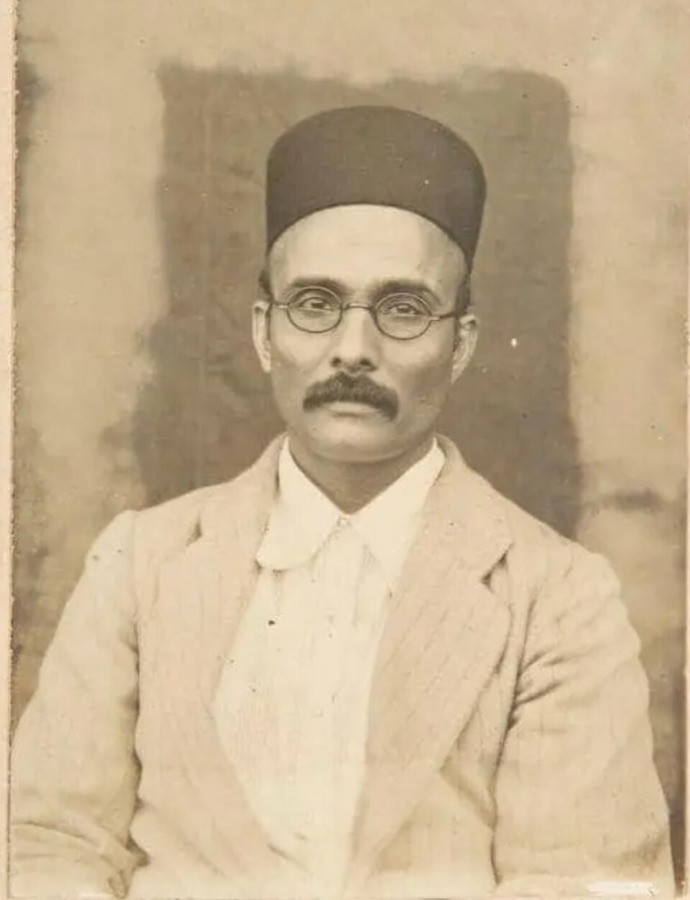
Savarkar, about 1910. Photographer unknown. Photo: Unknown photographer. Public domain, via Wikimedia Commons. The Bombay High Court refuses to look at Marseilles
Savarkar declined to take part in his trial and asked to put his arrest at Marseilles before the British and French governments. The court refused. Open the document
First sentence: transportation for life
The special tribunal in Bombay sentenced him to transportation for life and the forfeiture of his property in the Nashik conspiracy case.
Second sentence: transportation for life
He was sentenced to a second transportation for life for abetting the murder of Jackson. The two sentences were to run one after the other: fifty years. He was twenty-seven.
- The Hague, Netherlands
The Savarkar case at The Hague, 1911
On 24 February 1911 a tribunal of the Permanent Court of Arbitration held that Great Britain was not required to return Savarkar to France after his recapture at Marseilles.
- Cellular Jail, Port Blair, Andaman Islands
The Cellular Jail years, 1911-1921
Savarkar was held in the Cellular Jail at Port Blair from July 1911 until May 1921, serving two sentences of transportation for life passed in Bombay in December 1910 and January 1911.
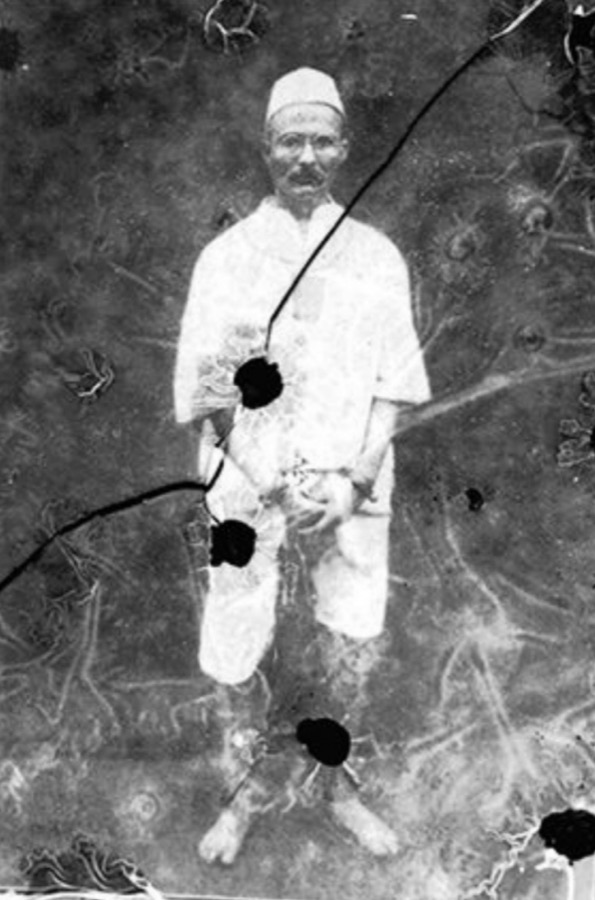
Savarkar in prison clothes. Undated; photographer unknown. Photo: Unknown photographer. Public domain, via Wikimedia Commons. 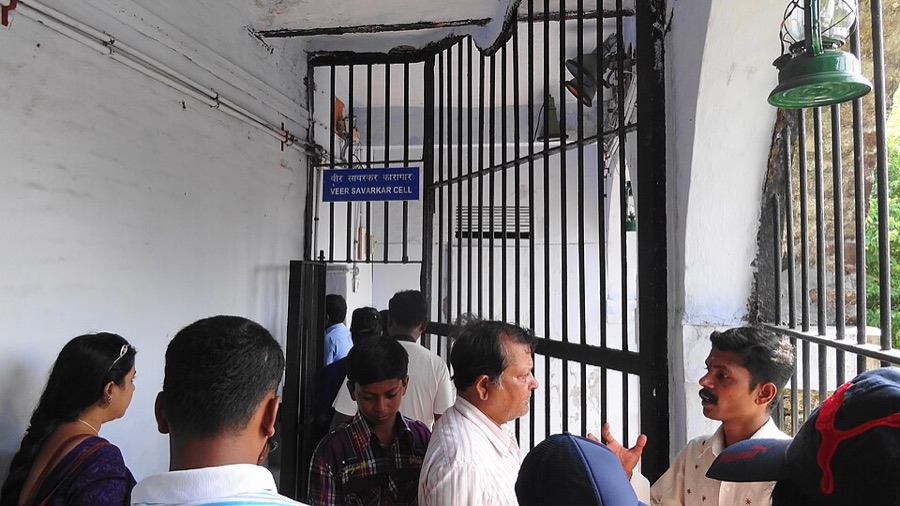
The cell in the Cellular Jail, Port Blair, shown to visitors as Savarkar's. Photographed in 2011. Photo: Aliven Sarkar. CC BY-SA 3.0, via Wikimedia Commons. First petition
He submitted his first petition for release, weeks after arriving in the jail. It was rejected. Read the question
First surviving letter home
The earliest of the Cellular Jail letters to his brother Narayanrao in the published edition. Open the letter
Petition to Sir Reginald Craddock
He handed a petition to the Home Member of the Government of India, Sir Reginald Craddock, who was visiting the jail. Open the document
Further petitions
He petitioned again in 1914, offering his services in the war, and in 1917, asking for a general amnesty for all political prisoners. Read the question
Death of Yesuvahini
Yesuvahini, the wife of his brother Babarao, died without having been allowed to see her husband again. Open the document
Petition of 1920
His last petition from the Andamans. His letter of 6 July 1920 refers to it. Open the letter
Poems without paper
By his own account in My Transportation for Life, he composed poems in his cell with no pen or paper, scratching lines on the wall and committing thousands of lines to memory. Open the document


Mainland prisons and Ratnagiri, 1921-1937
Return to the mainland
Both brothers were brought back from the Andamans. In June 1921 the Home Department recorded its decision not to release them. Open the document
Alipore, Ratnagiri and Yerwada jails
He was held in Alipore, then in Ratnagiri and Yerwada jails.
Essentials of Hindutva
The book was written in Ratnagiri jail and published under the pen-name “A Maratha”. Open the document
- Ratnagiri, Bombay Presidency
Restricted life in Ratnagiri, 1924-1937
Savarkar was released from prison on 6 January 1924 on condition that he live in Ratnagiri district and take no part in politics. The restrictions stayed in force until 1937.
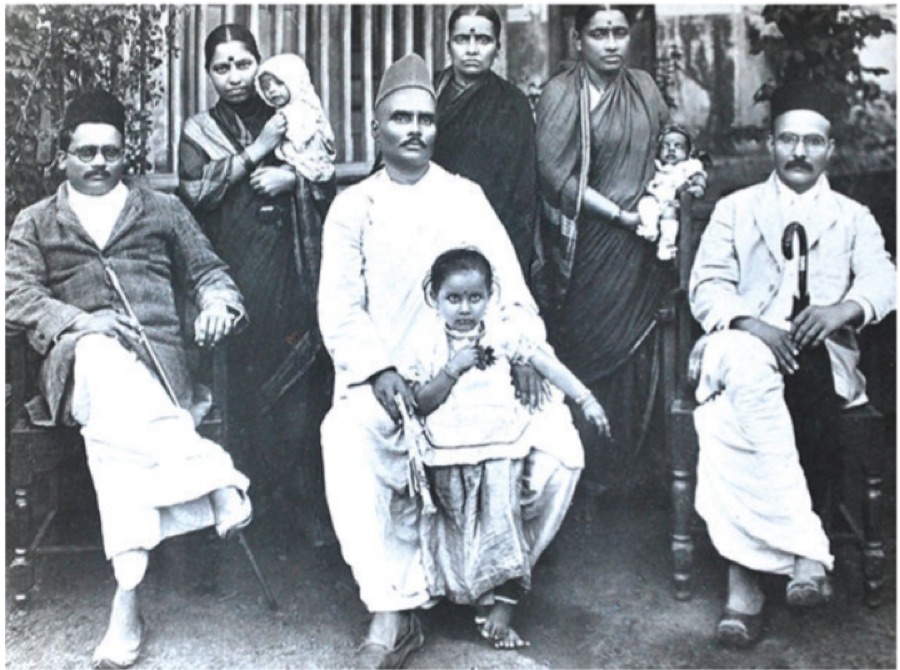
The Savarkar brothers, left to right Narayan, Ganesh and Vinayak, with Shanta, their sister Maina Kale and Yamuna. Undated, before 1950. Photo: Maharashtra State Archives. Public domain, via Wikimedia Commons. Hindu-Pad-Padashahi
His history of the Maratha empire was published. Open the document
The weekly Shraddhanand
A weekly paper named after Swami Shraddhanand of the Arya Samaj was started by his brother Narayanrao; Savarkar wrote for it.
Meeting with K. B. Hedgewar
Dr Hedgewar, who founded the Rashtriya Swayamsevak Sangh later that year, visited him at Ratnagiri.
Gandhi visits Ratnagiri
Gandhi called on Savarkar at his house in Ratnagiri.
Majhi Janmathep
His memoir of the Andamans was published in Marathi. Open the document
First inter-caste dinner
He organised the first of a series of public dinners at which Hindus of all castes, including those treated as untouchable, ate together. Open the document
Patit Pavan Mandir opened
A temple open to all Hindus regardless of caste was consecrated at Ratnagiri. It was built at Savarkar's urging with money given by Bhagoji Keer. Open the document
Untouchability conference
He presided over the Bombay Presidency Untouchability Eradication Conference.

The Hindu Mahasabha years, 1937-1947
Unconditional release
The restrictions that had confined him to Ratnagiri district since 1924 were lifted.
- British India
President of the Hindu Mahasabha, 1937-1943
After the Ratnagiri restrictions ended in 1937, Savarkar was elected president of the Hindu Mahasabha and held the office until 1943, promoting Hindu political consolidation.
President of the Marathi Sahitya Sammelan
He was elected president of the Marathi literary conference. He campaigned for Marathi words in place of Persian and English ones and coined many that are still in use.
Civil resistance in Hyderabad
He led the Hindu Mahasabha's unarmed campaign for civil rights for Hindus in the Nizam's Hyderabad.
Subhas Chandra Bose visits
Subhas Chandra Bose called on him at Savarkar Sadan in Bombay, months before Bose left India.
Bhagalpur
The Hindu Mahasabha held its session at Bhagalpur in defiance of a government ban. Savarkar was arrested on the way. Open the document
The war and Quit India
He urged Hindus to enlist in the armed forces, under the slogan “Hinduise all politics and militarise Hindudom”, and asked Mahasabha members to stay at their posts and not join the Quit India movement. Both positions are still argued over. Open the document
Honorary D.Litt., Nagpur
The University of Nagpur conferred an honorary doctorate on him.
Death of Babarao
His elder brother Ganesh (Babarao) died. Open the document
Ban on his writings lifted
The Government of Bombay lifted its ban on his books.
Independence Day
He hoisted both the saffron flag and the national tricolour at Savarkar Sadan.
After independence, 1948-1966
- Bombay and the Red Fort, Delhi
The Gandhi murder trial, 1948-1949
Savarkar was arrested on 5 February 1948, six days after the assassination of Mahatma Gandhi, and tried with the other accused at the Red Fort in Delhi. The special court acquitted him on 10 February 1949.
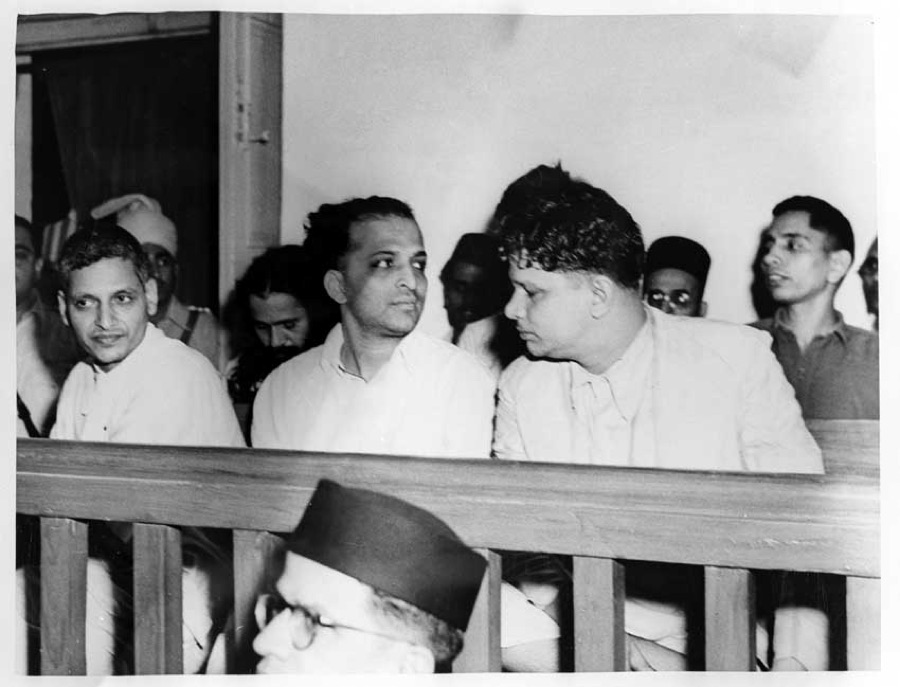
The accused at the opening of the trial in the Special Court, Red Fort, Delhi, 27 May 1948. Photo: Photo Division, Ministry of Information and Broadcasting, Government of India. Public domain, via Wikimedia Commons. 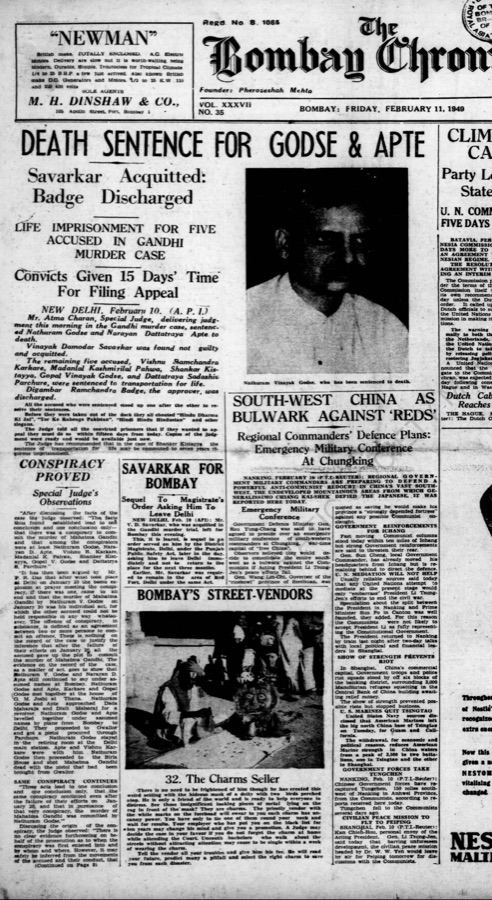
Front page of the Bombay Chronicle, 11 February 1949, reporting the judgment given the day before. Photo: The Bombay Chronicle. Public domain, via Wikimedia Commons. Letter to Bhopatkar
Four days after his acquittal he asked Annarao Bhopatkar to withdraw a proposed inquiry campaign. Open the letter
Death of Narayanrao
His younger brother Dr Narayanrao Savarkar, to whom the Andaman letters were written, died.
Detained at Belgaum
He was arrested and held in Belgaum jail before the visit of the Pakistani prime minister Liaquat Ali Khan to Delhi.
Abhinav Bharat dissolved
At a public meeting in Pune he dissolved Abhinav Bharat, declaring that its aim, the freedom of India, had been achieved.
Centenary of 1857
He was the main speaker at the centenary of the 1857 uprising in New Delhi.
Honorary D.Litt., Pune
The University of Poona conferred an honorary doctorate on him at his home.
Mrityunjay Diwas
His admirers marked the day on which his fifty-year sentence would have ended.
Six Glorious Epochs
His last long book, Saha Soneri Pane, was published. Open the document
Death of Yamuna
His wife Yamuna (Mai) died.
The fast
He gave up food and medicine, having written that a life whose work was done could be laid down by choice. Open the document
- Bombay


After his death
Commemorative stamp
The Government of India issued a 20 paise postage stamp on his birth anniversary, showing his portrait beside the Cellular Jail.
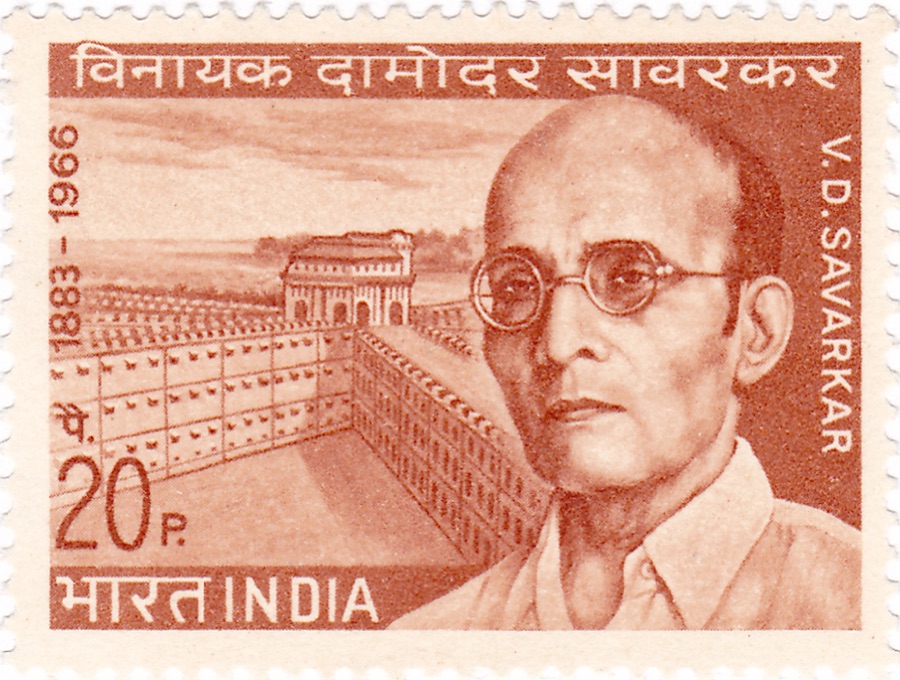
The 20 paise commemorative stamp issued on 28 May 1970: Savarkar and the Cellular Jail. Photo: India Post, Government of India. GODL-India, via Wikimedia Commons. Cellular Jail a National Memorial
The Cellular Jail at Port Blair was dedicated as a National Memorial.
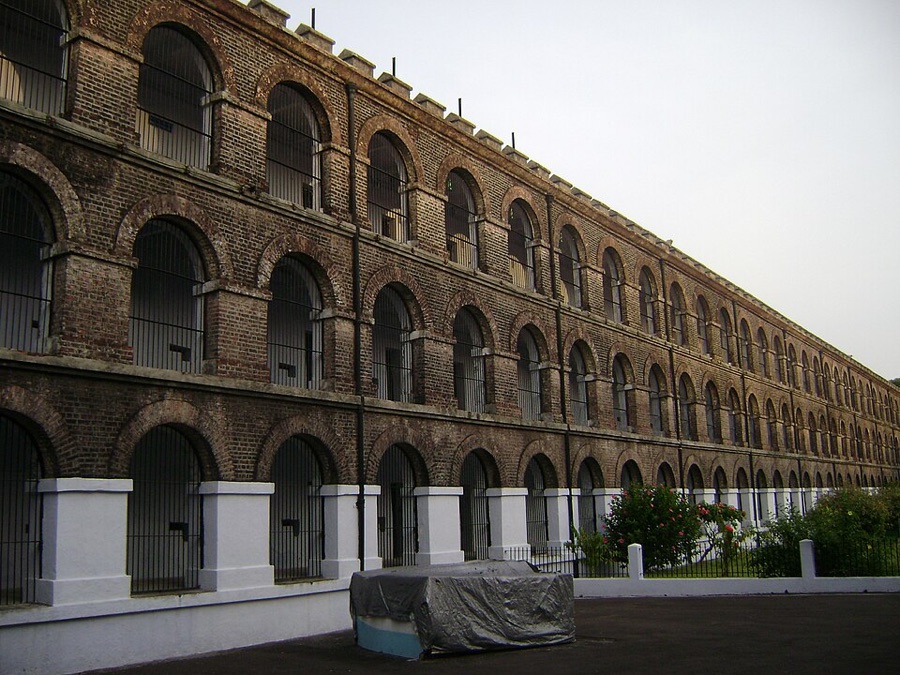
The Cellular Jail, Port Blair, a National Memorial since 1979. Photographed in 2012. Photo: Mainaksinghabarma. CC BY-SA 4.0, via Wikimedia Commons. Blue plaque in London
The Greater London Council put up a blue plaque at 65 Cromwell Avenue, Highgate: “Vinayak Damodar Savarkar, 1883-1966, Indian patriot and philosopher, lived here”.
Veer Savarkar International Airport
Port Blair airport was renamed after him.
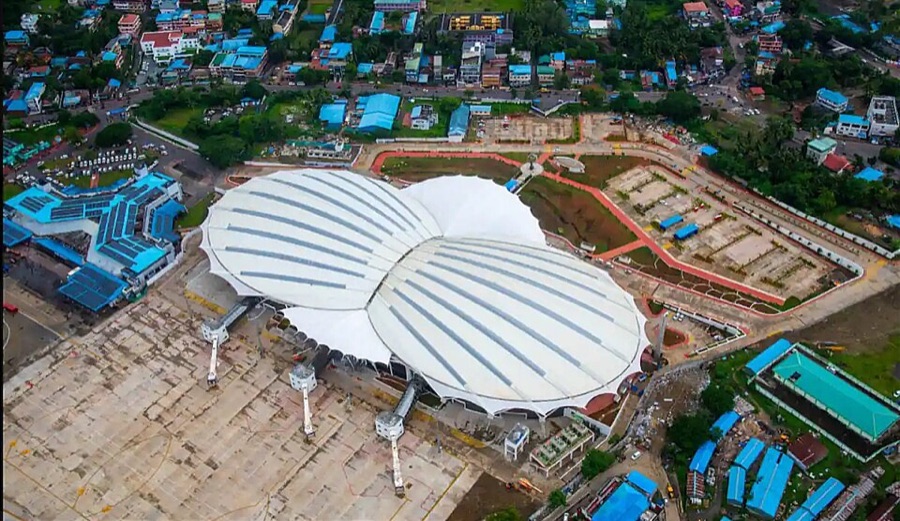
The new terminal of Veer Savarkar International Airport, Port Blair, 2023. Photo: Prime Minister's Office, Government of India. GODL-India, via Wikimedia Commons. Portrait in Parliament
President A. P. J. Abdul Kalam unveiled his portrait in the Central Hall of Parliament. Opposition parties stayed away. Open the document
Supreme Court declines to reopen the Gandhi case
The Supreme Court of India dismissed a petition asking for the assassination to be reinvestigated. Open the document


Dates on entries that have no document page of their own follow the chronology published by savarkar.org, checked against the Lok Sabha Secretariat booklet and the court records where those exist. Photographs are credited under each image.